
Heat is not only an outdoor construction or agricultural hazard. Factories, warehouses, foundries, commercial kitchens, manufacturing plants, loading areas, and other industrial environments can become dangerously hot, especially when workers perform physical tasks near machinery or radiant heat sources.
In 2026, heat safety deserves increased attention. The Occupational Safety and Health Administration (OSHA) updated its National Emphasis Program for outdoor and indoor heat-related hazards, reinforcing its focus on workplaces where heat exposure may result in serious illness or injury.
Understanding how heat stress develops, recognizing warning signs, and using practical controls can help create safer industrial workplaces.
Why Industrial Workers Face Heat Stress
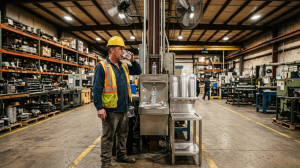 Heat stress develops when the body has difficulty getting rid of excess heat. Air temperature matters, but it is only one part of the problem. Humidity, radiant heat, limited air movement, physical exertion, protective clothing, and the length of exposure can all affect how much heat strain a worker experiences.
Industrial environments may contain additional heat sources. Furnaces, ovens, boilers, hot production equipment, steam systems, engines, and poorly ventilated work areas can increase indoor temperatures even when outdoor weather is moderate.
Workers who perform heavy lifting, repetitive material handling, climbing, pushing, pulling, or other physically demanding tasks also generate more internal body heat.
Recognizing Heat-Related Illness
Heat-related illness can range from relatively mild symptoms to a life-threatening emergency. Early recognition is important because a worker’s condition can worsen quickly.
Possible warning signs may include excessive sweating, headache, dizziness, weakness, nausea, muscle cramps, unusual fatigue, or reduced coordination. More serious symptoms can include confusion, loss of consciousness, seizures, or other significant changes in behavior or responsiveness.
Workers and supervisors should be trained to recognize potential heat illness and follow the workplace’s emergency procedures. Anyone showing severe symptoms should receive prompt emergency assistance rather than simply being told to rest and return to work.
Readers can also review our workplace safety FAQ for general information about identifying hazards and responding to unsafe conditions.
Heat Stress Prevention in Industrial Workplaces
Heat prevention works best when workplaces use several layers of protection instead of relying on a single measure. Water is important, but hydration alone does not eliminate excessive workplace heat.
Provide Ready Access to Water and Rest
Workers exposed to heat should have convenient access to drinking water and appropriate opportunities to recover from demanding work. Rest locations should reduce heat exposure whenever possible rather than simply moving a worker a few feet away from the same heat source.
NIOSH’s updated workplace heat recommendations emphasize engineering controls and work-practice controls for reducing occupational heat stress.
Plan Breaks Around Working Conditions
The need for recovery time may change throughout a shift. Increasing temperatures, high humidity, heavy workloads, protective clothing, direct sunlight, or radiant heat may require adjustments to work and rest schedules.
A fixed break schedule that works in moderate conditions may not provide the same protection during a heat wave or an unusually demanding production period.
Engineering and Administrative Controls
Engineering controls change the physical workplace to reduce exposure. Depending on the facility, these may include increasing air movement, improving ventilation, isolating heat-producing equipment, using reflective barriers, reducing steam leaks, controlling humidity, or providing cooled recovery areas.
Administrative controls change how work is organized. Examples may include scheduling strenuous work during cooler periods, rotating demanding tasks, reducing unnecessary exposure time, increasing recovery opportunities, and ensuring adequate staffing during high-heat conditions.
Acclimatization Matters
A worker who has not recently been exposed to hot conditions may be less prepared for a full workload in the heat. This can affect new employees, temporary workers, people returning after an absence, or workers facing a sudden seasonal temperature increase.
Acclimatization generally involves gradually increasing exposure so the body has time to adapt to working in a hot environment. A thoughtful heat-safety program should account for workers who are new to the environment or returning after time away.
Do Not Assume Experienced Workers Are Immune
Even experienced employees can develop heat-related illness. Changes in temperature, workload, protective clothing, individual condition, or environmental conditions can alter heat risk from one day to another.
Workers should therefore be encouraged to pay attention to symptoms in themselves and coworkers rather than assuming experience alone provides protection.
PPE Can Affect Heat Exposure
Personal protective equipment may be essential for controlling chemical, mechanical, electrical, or other workplace hazards. However, some protective clothing can also restrict airflow or reduce the body’s ability to release heat.
This does not mean necessary PPE should be removed. Instead, heat planning should consider the added thermal burden created by required protective equipment.
Match Heat Controls to the Actual Task
A worker performing light monitoring duties in an air-conditioned area may face a very different heat burden from someone wearing protective clothing near hot machinery. Effective heat-safety planning considers the actual combination of temperature, workload, work duration, PPE, and environmental conditions.
Training and Worker Awareness Are Essential
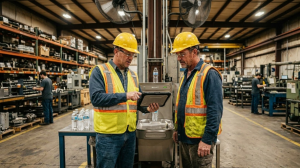 Heat-safety training should help workers understand why heat illness occurs, what symptoms may look like, how workplace controls work, and what procedures to follow when someone becomes ill.
Communication is especially important when workers are spread across large warehouses, loading areas, production floors, or outdoor industrial sites. Employees should know how to report unsafe heat conditions and how to obtain help quickly.
Industrial Injury Guide provides additional educational information about common workplace risks on our workplace safety resource and explains our broader safety-focused approach on the About Industrial Injury Guide page.
OSHA’s 2026 Heat Enforcement Focus
OSHA updated its heat National Emphasis Program in April 2026 to better direct inspections and outreach toward workplaces where heat risks are more likely to occur. The program applies to both indoor and outdoor heat hazards and uses current injury, illness, and enforcement information to identify higher-risk industries.
OSHA has also indicated that heat hazards may receive additional attention during certain inspections and during periods when the National Weather Service issues heat advisories or warnings in high-risk industries.
That makes heat prevention more than a seasonal outdoor issue. Industrial workplaces with indoor heat sources should also evaluate conditions before workers begin experiencing symptoms.
Building a Safer Approach to Industrial Heat
Preventing heat-related illness requires planning before conditions become dangerous. Workplaces can evaluate heat sources, improve ventilation, provide accessible water and recovery areas, adjust workloads when conditions change, support acclimatization, and train workers to recognize warning signs.
Most importantly, heat safety should be treated as an ongoing workplace hazard-management issue rather than something considered only during extreme summer weather. Indoor industrial processes can create significant heat exposure throughout the year.
By recognizing changing conditions and combining engineering controls, work practices, training, hydration, rest, and appropriate monitoring, industrial workplaces can take practical steps toward reducing heat-related risks and supporting safer working environments.